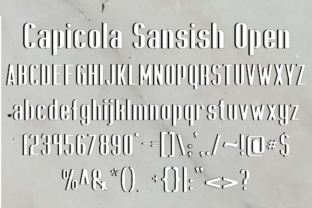
Capicola Sansish Open: A Practical Guide for Creators, Entrepreneurs, and Everyday Users
You know that moment when you are staring at a blank page, a design layout that feels stuck, or a project that needs a fresh direction? That is exactly the kind of scenario where Capicola Sansish Open tends to show up. It is not a flashy product or a complicated system. It is a flexible, open resource that people in creative, professional, and even casual settings are turning to for structure, inspiration, and straightforward utility.
If you have not yet run into it, you likely will soon. Here is what it actually is, where it fits into real workflows, and why different types of users find it genuinely useful.
What Capicola Sansish Open Actually Means
Capicola Sansish Open is best understood as an adaptable and accessible framework or toolset designed to give users a solid starting point without locking them into rigid constraints. Think of it like a well-designed template that respects your need to customize, modify, and build your own approach. It is open in the sense that you are not boxed in by someone else's assumptions about what you need.
For some, it functions as a creative prompt. For others, it is a structural backbone for organizing information, designing materials, or planning a project. The "Sansish" part hints at simplicity and clarity, while "Capicola" suggests something layered and satisfying when handled correctly. Together, they point to a resource that values both substance and accessibility.
This is not a product you buy once and use the same way every time. It is more like a set of principles, files, or guidelines that you adapt to whatever you are working on. That is why you see it popping up in so many different contexts.
Where People Are Using Capicola Sansish Open
The real test of any tool or resource is whether it fits into actual routines. Capicola Sansish Open does not live in a theoretical space. It shows up in places where people are trying to get things done.
Creative and Design Workflows
Graphic designers, illustrators, and content creators often need a starting point that does not stifle their own ideas. If you have ever spent too much time setting up a grid, choosing a typographic hierarchy, or laying out a basic structure before you even start the actual creative work, you understand the value of something that handles those initial decisions.
Capicola Sansish Open gives you that foundation. A designer working on a digital magazine layout can use it to establish a clean base, then layer in their own visuals, color choices, and typography without fighting the structure. An illustrator preparing a portfolio pdf can drop their work into the framework and immediately see how the pieces interact with whitespace and text. The time saved on setup translates directly into more time for the work that matters.
Content Planning and Blogging
Bloggers, newsletter writers, and content marketers deal with a constant cycle of planning, drafting, and publishing. One of the hidden drains on creative energy is deciding how to structure each post or email. Capicola Sansish Open offers a repeatable but flexible approach to organizing ideas.
Imagine you run a small blog about sustainable living. You have a dozen half-formed post ideas, but each one needs a coherent structure before you can write. Using Capicola Sansish Open, you can quickly map out an introduction, key points, a practical takeaway, and a closing thought without reinventing the format every time. The structure becomes a habit, which frees your brain to focus on the actual writing and research.
It works the same way for email sequences, course outlines, or even video scripts. The consistency helps your audience know what to expect, and the flexibility lets you pivot when a topic deserves a different treatment.
Small Business Operations and Planning
Small business owners and freelancers often wear too many hats. You might be the product developer, the marketer, the bookkeeper, and the customer support team all at once. In that environment, anything that reduces decision fatigue is a win.
Capicola Sansish Open can serve as a planning framework for product launches, service packages, or client onboarding. A freelance web designer, for example, might use it to structure a client brief: problem statement, goals, timeline, deliverables, and feedback loops. Instead of starting from scratch for each client, you adapt the framework, fill in the specifics, and maintain a professional standard without the overhead.
It also helps with quarterly planning. A small business owner can use the same structure to review what worked, what did not, and what needs to change, all without getting lost in a sea of spreadsheets and sticky notes.
Education and Training Materials
Educators, trainers, and course creators face a similar challenge: how to present information in a way that is clear, engaging, and easy to follow. Capicola Sansish Open lends itself well to lesson plans, workshop outlines, and instructional guides.
A freelance educator teaching a weekend workshop on digital photography can use it to structure the session: opening context, core concepts, hands-on practice, review, and next steps. The participants benefit from a predictable rhythm, and the instructor can adjust the depth of each section based on the group's energy and questions.
It also works for self-guided materials. If you are putting together a downloadable workbook or a quick reference guide, the framework helps you avoid the trap of dumping information without a logical flow. Learners stay engaged because the material feels intentional, not scattered.
Personal Productivity and Goal Setting
Not every use case is professional. Many people adopt Capicola Sansish Open for personal projects, goal setting, or even journaling. The structure helps turn vague intentions into concrete actions.
Think about setting a fitness goal or planning a home renovation. Without a framework, it is easy to stay in the "I should do something" phase indefinitely. Capicola Sansish Open gives you a way to break it down: what you want to achieve, why it matters, what steps are realistic, and how you will measure progress. It turns the abstract into the manageable.
People also use it for habit tracking, weekly reviews, or even planning a trip. The underlying principle is the same: a simple, open structure that you can adapt to whatever you are trying to do, without feeling like you are filling out a bureaucratic form.
What to Consider Before Using Capicola Sansish Open
No resource is perfect for every situation. Before you dive in, it helps to think about whether Capicola Sansish Open aligns with your specific needs and working style.
Your Own Preference for Structure
Some people thrive with loose frameworks. Others need more rigid guidance before they feel comfortable. Capicola Sansish Open leans toward flexibility, which is a strength for many users but can feel too open-ended if you prefer detailed instructions. If you are someone who likes every step spelled out, you may need to supplement it with your own checklists or guidelines.
On the other hand, if you have ever felt suffocated by overly prescriptive templates, this approach will likely feel liberating. You get the skeleton, and you decide how much flesh to add.
The Nature of Your Project
Certain projects benefit from standardization across a team or audience. If you are collaborating with others, Capicola Sansish Open can serve as a shared language, as long as everyone agrees on how to adapt it. Without that agreement, you might end up with divergent interpretations that reduce consistency.
For individual projects, this is rarely an issue. You control the adaptation, so the framework bends to your needs rather than the other way around.
Time Investment for Setup
While Capicola Sansish Open saves time in the long run, there is an initial period of understanding how it works and how to customize it for your use case. Do not expect instant fluency. Spend a little time experimenting with it on a low-stakes project before you rely on it for something important. That investment pays off quickly, but it is worth acknowledging upfront.
Integration With Existing Tools
If you already use specific software, platforms, or systems, check how Capicola Sansish Open fits into that ecosystem. In many cases, it is format-agnostic, meaning you can use it in a text editor, a design tool, a notebook, or a whiteboard. But if you are looking for deep integration with a particular app, you may need to do some manual adaptation.
That is not necessarily a drawback. The lack of platform lock-in is actually a feature for people who value portability and longevity. You are not dependent on a single vendor or tool to access your own work.
Realistic Outcomes You Can Expect
Using Capicola Sansish Open consistently tends to produce a few noticeable results. Projects start faster because the initial friction is lower. The quality of output becomes more consistent because you are not starting from zero each time. And perhaps most importantly, you spend less mental energy on process and more on the actual substance of your work.
Creators report feeling less intimidated by blank canvases. Entrepreneurs find that their planning cycles become more efficient. Educators appreciate the clarity it brings to their materials. And everyday users discover that even small personal goals feel more achievable when there is a simple structure to follow.
None of this happens automatically. The resource is only as effective as your willingness to adapt it to your own context. But for anyone who has ever wished for a reliable starting point that does not dictate every move you make, Capicola Sansish Open offers exactly that.